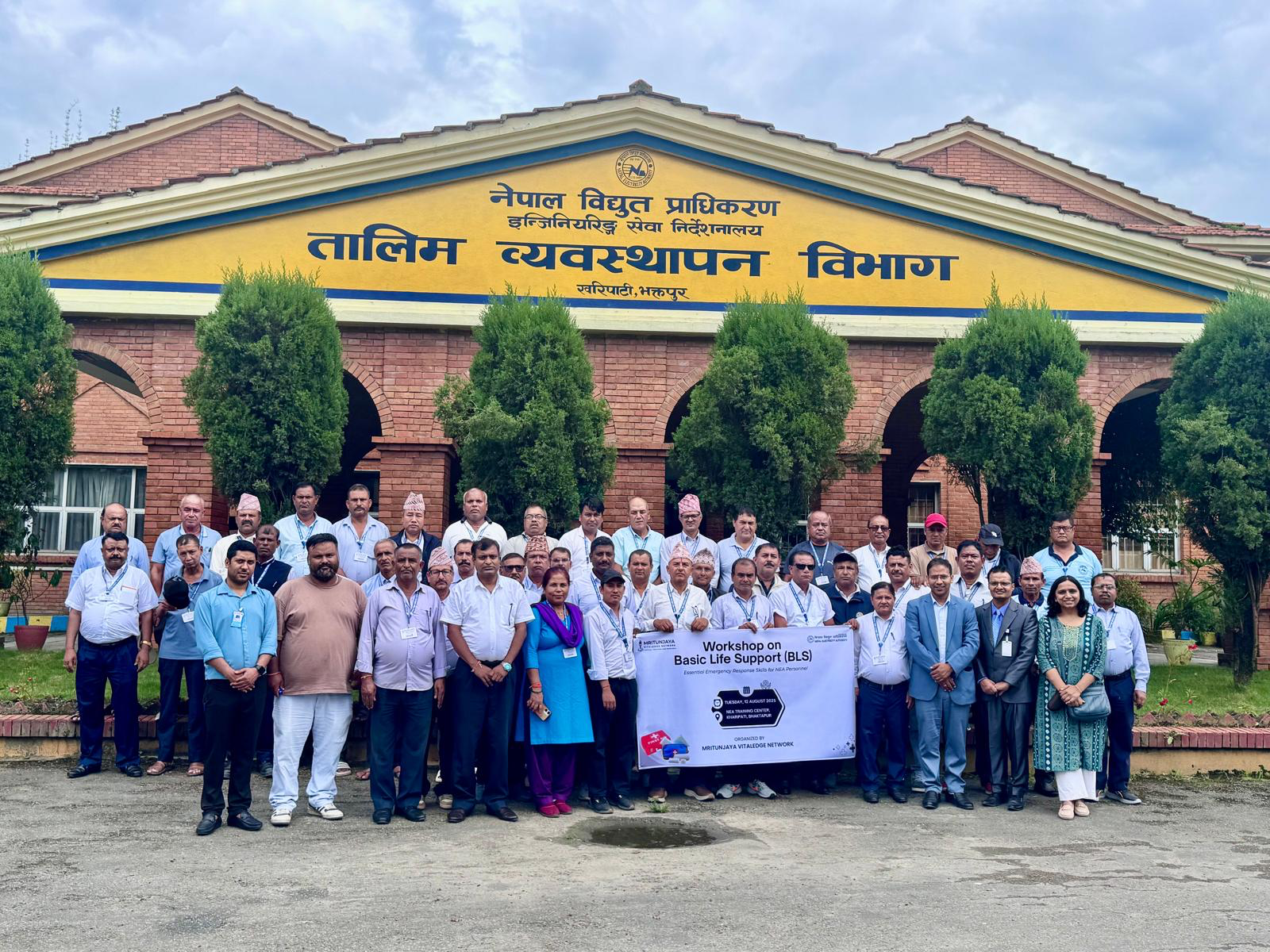
Workshop on Basic Life Support (BLS) to NEA Personnel
A vital hands-on BLS training delivered to Nepal Electricity Authority (NEA) personnel, equipping them with life-saving skills to respond effectively in emergencies.
The ability to respond effectively during the first few minutes of a medical emergency can mean the difference between life and death. That’s why the Mirtunjaya VitalEdge Network conducted a specialized Basic Life Support (BLS) workshop for employees of the Nepal Electricity Authority (NEA), aiming to build confidence and competence in handling critical situations.
Why BLS Training Matters for NEA Workers
NEA employees often work in physically demanding and high-risk environments — whether in power stations, substations, or field operations. A sudden cardiac arrest, electrical injury, or trauma could occur without warning. Equipping these teams with Basic Life Support knowledge ensures that immediate help is available before professional medical responders arrive.
Core Skills Covered in the Workshop
Adult and child CPR techniques with real-time feedback devices
Proper use of Automated External Defibrillators (AEDs)
Choking response for conscious and unconscious individuals
Scene safety assessment and teamwork during emergencies
Recovery position and post-resuscitation care basics
Practical & Simulated Learning
The training emphasized active participation, hands-on experience, and realistic emergency simulations. Each participant practiced CPR on feedback-equipped manikins and used AED training devices to ensure skill retention and muscle memory. Simulated scenarios mimicked real workplace incidents such as electrical shock or unconscious collapse, tailored to NEA’s field environment.
Impact on NEA’s Safety Culture
NEA's commitment to investing in emergency preparedness is a proactive step toward building a safety-first culture. Empowering employees with BLS skills doesn’t just improve emergency response — it creates a workplace where people feel supported, valued, and capable of protecting their peers in a crisis.
| Skill | Real-world Application | Workplace Benefit |
|---|---|---|
| CPR & AED Use | Responding to cardiac arrest | Reduces fatality risk before EMS arrives |
| Choking Relief | Assisting during airway blockages | Prevents severe hypoxia or death |
| Scene Assessment | Approaching emergencies safely | Minimizes harm to rescuer and victim |
| Team Coordination | Working in pairs/groups | Increases response efficiency |
Feedback from NEA Participants
"“I now feel confident that I can actually help someone in a life-or-death situation, not just stand by.” — NEA Field Technician"
Many attendees expressed appreciation for the practical format and said they would recommend the training to colleagues. Several suggested expanding it to cover more remote NEA sites and integrating refresher sessions into regular safety protocols.
Looking Ahead: Broader Rollout Plans
Given the workshop’s success, future sessions are being planned for NEA branches across Nepal. The goal is to build a consistent baseline of life-saving skills across departments, from electrical engineers to administrative staff — because emergencies can happen anywhere.
Join the Movement for Safer Workplaces
Mirtunjaya VitalEdge Network is proud to support organizations like NEA in creating a more resilient workforce. If you’d like to bring BLS or other emergency response training to your team, get in touch with us — together, we can build a safer tomorrow.